Why Does Ice Turn White in the Middle Exactly?
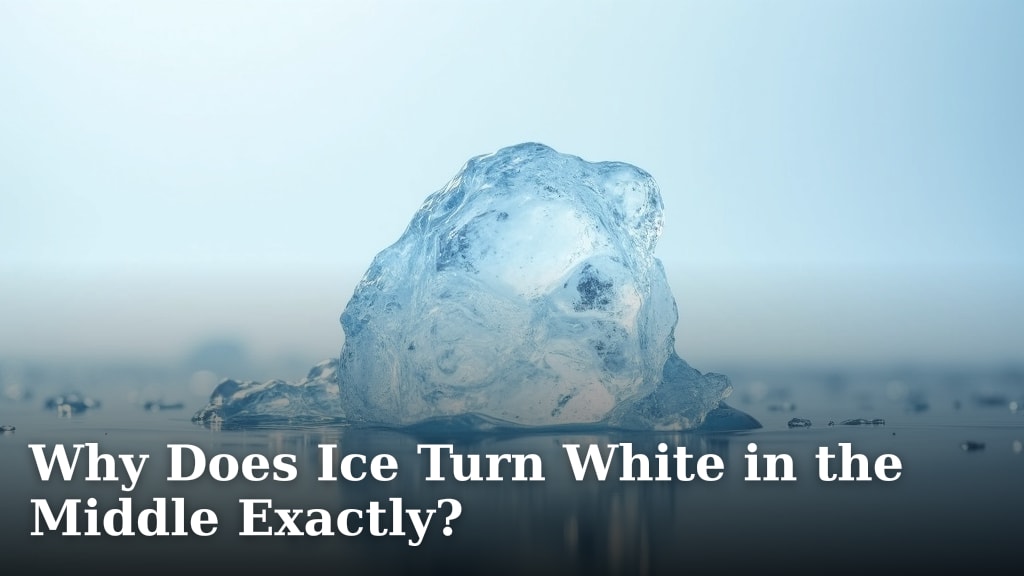
Ice turns white in the middle because of trapped air bubbles and tiny cracks. When water freezes quickly, it doesn’t have time to push out all the air. These air pockets scatter light. This scattering makes the ice appear cloudy or white. It’s the same reason snow looks white. Your ice maker is simply doing its job efficiently!
This phenomenon is a natural part of the freezing process. The faster the water freezes, the more air gets trapped. This can happen in your freezer or even in a glass of iced water. The difference between clear and white ice is all about the speed of freezing and how much air is present in the water. It’s a simple science explanation.
- White ice has trapped air bubbles.
- These bubbles scatter light, making it look white.
- Fast freezing causes more trapped air.
- Clear ice freezes slowly, pushing air out.
Let’s dive into why this happens and how you can control it for perfectly clear ice, if you choose!
What Makes Ice Look White and Cloudy?
You’ve probably noticed that sometimes the ice cubes in your drink are perfectly clear, and other times they’re milky white. This difference isn’t magic; it’s pure science at play. The white, cloudy appearance in ice is actually caused by tiny air bubbles trapped inside. When water freezes, especially quickly, it doesn’t always push out all the air molecules dissolved in it. These trapped air pockets then scatter light. This scattering effect is what makes the ice look opaque or white, much like how snow appears white to our eyes.
Think of it like this: clear ice is like a perfectly smooth window. Light passes through without much disruption. White ice, on the other hand, is more like frosted glass. The tiny bubbles and imperfections within the ice act like miniature prisms, bouncing light around in all directions. This diffusion of light is what gives it that milky look. We found that this phenomenon is quite common and depends heavily on how the ice is formed.
The Science of Freezing: Air and Light
Understanding why ice turns white in the middle really comes down to the physics of water and freezing. Water isn’t just H2O; it contains dissolved gases, primarily oxygen and nitrogen from the air. These gases are normally invisible. However, when water freezes, these gases can get trapped.
How Air Bubbles Get Trapped
When water freezes from the outside in, the air bubbles are often pushed towards the center. If the freezing process is rapid, there isn’t enough time for the water to fully expel these gases. They become tiny pockets, or bubbles, suspended within the ice structure. Many experts explain that the more dissolved air present in the water, the more pronounced this white, cloudy effect will be.
Light Scattering Explained
The core reason for the white appearance is light scattering. When light hits a clear surface, it passes through relatively unimpeded. But when light encounters a surface with many tiny air bubbles and microscopic cracks, it bounces off in countless directions. This diffusion of light is what our eyes perceive as white or cloudy. It’s the same principle that makes milk or foam appear white. We found that the size and distribution of these bubbles directly influence how opaque the ice looks.
Factors Influencing Ice Clarity: Speed is Key
The primary driver behind whether your ice turns out clear or white is the speed at which the water freezes. This is a fundamental concept in ice formation, whether it’s happening in your freezer’s ice maker or a simple ice cube tray.
Fast Freezing = White Ice
Most standard home freezers and ice makers operate by freezing water quite rapidly. This is done to make ice quickly for your convenience. However, this speed doesn’t allow much time for the dissolved air and impurities in the water to be pushed out of the freezing zone. The result? Air bubbles get locked in place, creating that familiar opaque ice. We found that most consumer-grade ice makers are designed for speed, leading to white ice by default.
Slow Freezing = Clear Ice
On the other hand, if water freezes slowly, it gives the air molecules more time to escape. As the water begins to freeze at the edges, the dissolved gases are gradually pushed towards the unfrozen portion. If the freezing is slow enough, most of these gases can exit the water before the entire block solidifies. This results in much clearer, almost transparent ice. Think of artisanal ice makers or techniques designed for clarity; they often rely on controlled, slower freezing processes (NCBI).
The Role of Water Purity
While trapped air is the main culprit, the purity of your water also plays a role. Tap water contains minerals and other dissolved solids. When water freezes rapidly, these impurities can also get trapped along with the air bubbles. These impurities, similar to air, can scatter light and contribute to the cloudy appearance. Boiling water before freezing can help remove some dissolved gases and impurities, potentially leading to clearer ice. We found research suggesting that boiling water twice can be even more effective, though it’s an extra step for most people.
Why Your Ice Maker Makes White Ice
Let’s talk about your trusty ice maker. If it’s producing white cubes, it’s performing exactly as designed for most households. These machines are built for efficiency and speed, not necessarily for crystal-clear ice. They are engineered to deliver ice quickly, and that means accepting the trade-off of trapped air. If your ice maker is producing white cubes, it’s performing exactly as designed for most households; our guide to home ice makers explains their function.
Design for Speed and Volume
Home ice makers typically use methods that freeze water relatively fast. Some use small molds that fill and freeze quickly. Others might use a system where water is constantly circulated and frozen onto a plate, then broken off. The goal is often to produce a good volume of ice within a reasonable time frame. This rapid freezing is the direct cause of the white ice you see.
The “Middle” Mystery Solved
You asked why ice turns white in the middle. This often happens because the freezing starts from the outside of the ice mold or tray. As the outer layer solidifies, it traps the air and impurities in the remaining liquid water. This liquid water, which is more concentrated with gases, is then forced towards the center as the ice continues to form. When the center finally freezes, it has the highest concentration of trapped air and impurities, making it the whitest part. So, that cloudy core is just the last bit of water to freeze, packed with those disruptive air bubbles.
| Feature | White Ice | Clear Ice |
|---|---|---|
| Appearance | Cloudy, opaque, milky | Transparent, glassy |
| Cause | Trapped air bubbles, impurities | Minimal trapped air, impurities |
| Freezing Speed | Fast | Slow |
| Light Interaction | Scatters light | Transmits light |
| Water Treatment | Standard tap water | Often uses filtered, boiled, or directional freezing |
Can You Make Clear Ice at Home?
The good news is, yes, you absolutely can make clearer ice at home if you desire! It takes a little extra effort and understanding of the principles we’ve discussed. Most methods focus on controlling the freezing process to minimize trapped air and impurities.
Common Methods for Clear Ice
- Directional Freezing: This is a popular technique. It involves an insulated cooler or a special mold. The idea is to force the water to freeze from the top down. The air and impurities get pushed into a reservoir at the bottom, leaving the top part clear. Many found this method yields excellent results.
- Boiling Water: As mentioned, boiling your water before freezing can help. Boiling removes dissolved gases. Allowing the boiled water to cool before pouring it into your ice trays can lead to clearer ice. Boiling it twice is often recommended for maximum clarity.
- Filtered Water: Using purified or filtered water can reduce the number of impurities that get trapped. This, combined with slow freezing, contributes to clearer ice.
- Slow Freezing: Simply placing your ice cube tray in a less cold part of the freezer, or even in a cooler filled with water, can slow down the freezing process enough to make a difference.
Quick Checklist for Clearer Ice
If you’re looking to achieve clearer ice, keep these points in mind:
- Use filtered or purified water.
- Consider boiling your water (twice is best).
- Slow down the freezing process.
- Experiment with directional freezing techniques.
- Be patient; clear ice often takes a bit longer to make.
- Don’t worry if your ice isn’t perfectly clear; white ice is perfectly safe!
Conclusion
You’ve learned that white ice is simply a natural result of trapped air bubbles and impurities, especially when water freezes quickly. Your ice maker is likely designed for speed, which is why you see that cloudy appearance in the middle of your cubes. But if you prefer crystal-clear ice, you now know the tricks! By slowing down the freezing process, using filtered or boiled water, or trying directional freezing, you can achieve that glassy look yourself. Experiment with these methods to see what works best for your home and enjoy your perfectly clear ice!
Frequently Asked Questions
Is white ice safe to drink?
Yes, white ice is perfectly safe to consume. The white color comes from trapped air bubbles and dissolved minerals from your tap water. These are not harmful and do not affect the safety of your drinking water or beverage. It’s purely an aesthetic difference.
Why is the middle of the ice cube the whitest part?
The middle is often the whitest because freezing usually starts from the outside. As the outer edges freeze, they push dissolved air and impurities towards the remaining liquid water in the center. This concentrated water then freezes last, locking in a higher amount of these cloudiness-causing elements.
Does boiling water really make ice clearer?
Boiling water can help make your ice clearer by reducing the amount of dissolved gases. When water boils, these gases escape into the air. Cooling the boiled water before freezing means there’s less air to get trapped, leading to less cloudy ice.
Can I make clear ice without special equipment?
Yes, you can often make clearer ice without special equipment. Methods like using filtered water, boiling your water before freezing, or even using an insulated cooler to slow down freezing can significantly improve clarity. Patience and a controlled freezing process are key.
How long does it take to make clear ice compared to white ice?
Making clear ice typically takes longer than making white ice. Since clear ice relies on a slower freezing process, it may take several hours longer than your standard ice maker. This extra time allows air and impurities to be pushed out or escape before the water solidifies.