Does a Countertop Ice Maker Also Dispense Water?
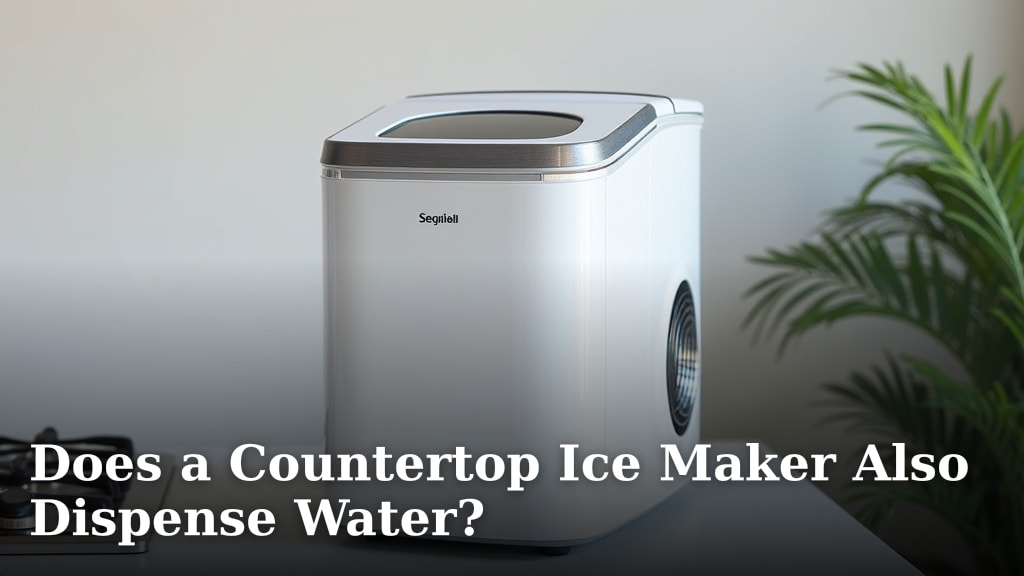
Yes, many countertop ice makers also include a water dispenser. It’s a common feature that combines two handy functions into a single, space-saving appliance for your countertop.
However, not all models have this capability. You’ll need to check the specific product details. The combined functionality is a popular choice for homes, offices, or RVs where convenience is key.
- Some countertop ice makers dispense both ice and cold water.
- Always check the model specifications before you buy.
- Models with this feature typically have a separate reservoir.
- They offer great convenience in a compact size.
- The water dispenser uses the same reservoir as the ice maker.
Below, we’ll walk through exactly how to tell if a unit has a dispenser and what to consider when choosing the right one for your needs.
How to Verify Your Countertop Ice Maker Has a Water Dispenser
You’re eyeing a shiny new ice maker for your kitchen counter. But does it just make ice, or does it also give you chilled water on demand? Let’s find out. The answer isn’t always in the product name. You need to look a little closer at the features list and the physical design of the unit.
First, scan the product description for key phrases. Terms like “ice and water dispenser,” “cold water function,” or “refreshment center” are direct signals. Another clue is the mention of a “dual dispensing system” or a “separate water outlet.” If you see these, you’ve likely found a combination model.
What to Look for in the Product Listing
Don’t just rely on the main title. Dive into the bullet points and specifications. Manufacturers are required to list primary functions. A model that only makes ice will typically focus its description on ice production speed, ice types (bullet, nugget), and capacity. A combination unit will explicitly mention dispensing water alongside those details.
The “Features” Bullet Points
Look for a specific line item. It might say, “Two ways to enjoy: dispense ice or chilled water.” Sometimes, it’s as simple as an included water reservoir with a separate spigot or lever. If the description talks about a “large water tank” for both ice making and drinking water, that’s a very strong indicator.
Checking the Specifications and Dimensions
The specs can tell you more than size. Check the “water reservoir capacity.” Some models list two volumes: one for the ice-making reservoir and a larger one for the drinking water supply. The presence of a dedicated “water outlet” or “dispenser nozzle” in the feature list is your most concrete piece of evidence.
Inside the Appliance: How the Dual System Works
Once you know a model has this feature, how does it actually work? It’s a clever, simple piece of engineering. Most combination units are designed with efficiency and space in mind, sharing core components between the two functions.
The system typically revolves around one main water reservoir. You fill this tank up. An internal pump and freezing mechanism draw from this reservoir to create ice. That same reservoir is also connected to a chilled water line with a dispenser spigot. So, you’re serving cold water from the same source used to make ice.
The Role of the Water Reservoir and Pump
This shared reservoir is key. It means you only have one place to fill for both functions. The pump does double duty, circulating water to the freezing plate and maintaining pressure for the water dispenser. Many experts suggest that this design is efficient because it minimizes the number of parts and plumbing connections inside a small appliance.
The Difference in Water Paths for Ice vs. Drinking Water
Here’s an important nuance. While the water comes from the same source, the path it takes can differ. The water used to make ice circulates and freezes. The water you drink is simply drawn from the reservoir and chilled (if the unit has a cooling feature) before being dispensed. This is why using clean, filtered water is recommended by the CDC for both ice and drinking purposes, to ensure the best taste and hygiene.
Does the Water Get Filtered?
Most countertop models do not have an internal water filter. The water dispenser delivers the same water you poured in. If you want great-tasting water and ice, it’s best to fill the reservoir with filtered water from your home fridge or a pitcher filter. Some premium models may include a basic charcoal filter for the water line, but this is not common in standard units.
Key Benefits of a 2-in-1 Countertop Ice and Water Dispenser
Why would you want this combo feature? The advantages are practical and centered on everyday convenience. It’s about saving space, time, and effort in a busy home or office.
- Space Saving: You get two appliances for the footprint of one. This is perfect for small kitchens, office break rooms, dorm rooms, or RVs where counter space is precious.
- Ultimate Convenience: Imagine grabbing a glass of cold water without opening the fridge. Or filling a water bottle directly from the machine. It’s a quick, handy access point for hydration.
- Cost-Effective: Buying one combination unit is generally less expensive than purchasing a separate ice maker and a separate water cooler or dispenser.
- Stylish and Integrated: A single, sleek unit looks tidier than having multiple appliances cluttering your countertop.
Potential Limitations to Consider
Of course, no appliance is perfect. A combined ice and water maker comes with a few trade-offs you should be aware of before making a decision. It’s not just about the features; it’s about how they fit your lifestyle.
The primary limitation often relates to capacity and performance. Because the machine is doing two jobs, one or both might be slightly less powerful than a dedicated single-function appliance. You’re balancing convenience against peak performance.
Ice Production vs. Water Dispensing Speed
The unit has a finite amount of power and time. If you’re using the water dispenser heavily, it might slow down the next cycle of ice production slightly. For the average household, this is barely noticeable. But for a large gathering where you need a lot of ice and cold water quickly, it’s something to keep in mind.
Water Reservoir Size and Filling
A single shared reservoir means that if you use a lot of ice or water, you’ll be refilling it more often. A large 3-liter reservoir might last a family a day, while a smaller 1.5-liter tank might need daily attention. Always check the reservoir capacity in the specs. We found that models with capacities over 2 liters generally receive better reviews for convenience.
Do You Need to Empty It for Travel?
If you plan to move the unit, like to an RV or vacation home, you’ll need to fully drain both the ice-making and water reservoir compartments. The draining process can be slightly more involved than with a simple ice maker. Most models have drain plugs, but it’s an extra step. Our guide to drain requirements explains if your countertop ice maker needs a drain.
Ice Quality: Does the Dispenser Affect It?
This is a common question. Does having a water dispenser mean the ice is different or lower quality? Generally, the answer is no. The freezing mechanism is separate from the water dispensing spigot. The quality of the ice depends more on the cooling technology, the ambient temperature, and the water you use.
However, because the water reservoir is often larger and exposed to room air more frequently (when you’re filling it for water), there’s a slightly higher chance for minor taste impurities if not maintained. This is easily solved by regular cleaning and using filtered water. According to appliance care guidelines from sources like the Cleveland Clinic, regular cleaning of any water-using appliance helps prevent bacterial growth and maintains taste.
Making Your Choice: What to Look For When Shopping
You’re convinced a combo unit could work. Now, how do you pick the best one for you? Focus on these key specs and features. Think about who will use it and how often.
Essential Specs to Compare
We recommend creating a simple comparison chart. Look at these metrics side-by-side for two or three models you like. The goal is to match the machine’s capacity to your household’s daily needs.
| Feature | Why It Matters | Good for a Small Household | Good for an Office/Large Family |
|---|---|---|---|
| Ice Production (lbs/24hrs) | Tells you how much ice it can make in a day. | 20-26 lbs | 40+ lbs |
| Ice Storage Bin (lbs) | How much ice it holds before you need to use some. | 2 lbs | 4+ lbs |
| Water Reservoir (Liters) | How often you’ll refill it for ice and water. | 1.5 – 2.0 L | 2.5+ L |
| Cycle Time (Minutes) | How long between batches of ice. | 6-15 minutes | 8-12 minutes |
| Noise Level (dB) | Important for quiet spaces like an office or kitchen. | Under 45 dB | Under 50 dB |
The Dispenser Design and Ease of Use
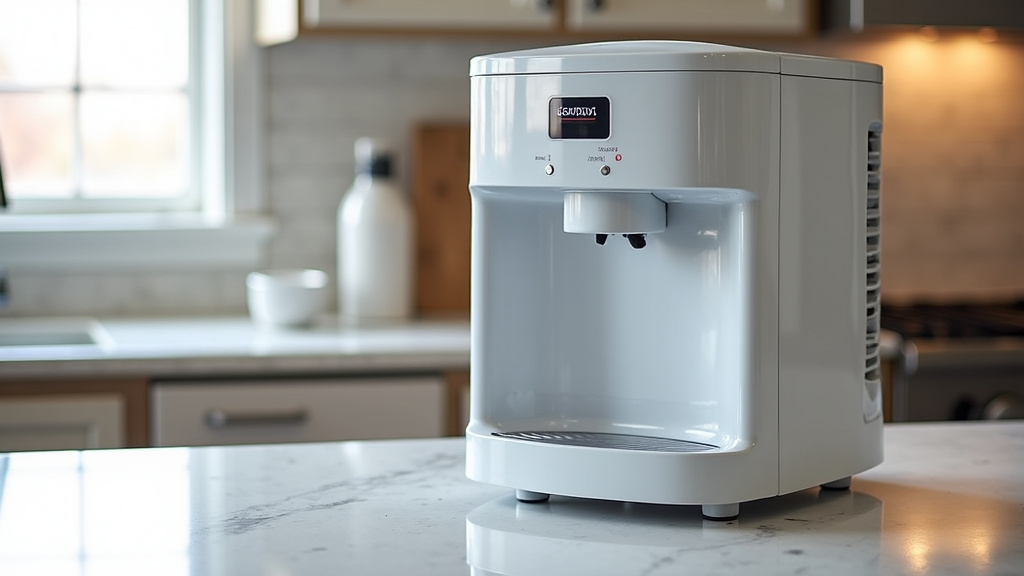
Look at photos and videos of the dispenser in action. Is the spigot easy to operate with one hand? Is there a child-safety lock? Does it have a drip tray that’s easy to remove and clean? These small details affect daily happiness with the product. You want a dispenser that doesn’t create a puddle on your counter every time you get a glass of water.
Cleaning and Maintenance Requirements
This is non-negotiable. A machine that handles both ice and drinking water must be easy to clean. Check if the reservoir is removable. Look for models that have a “self-cleaning” or “easy-clean” cycle. Regular cleaning with a mild vinegar solution, as recommended by the appliance manufacturer, is essential. A complicated cleaning process means you’ll likely put it off, leading to scale buildup or off-tasting ice and water.
Your Quick Shopping Checklist
Ready to shop? Keep these five key points in mind. This checklist will help you avoid buyer’s remorse and choose a countertop ice and water dispenser that truly fits your life.
- Confirm the Water Dispenser Feature: Don’t assume. Check the product description and feature list explicitly for “water dispenser” or “cold water function.”
- Match Capacity to Your Needs: Estimate your daily ice and water use. A family of four will need a larger reservoir and higher ice production than a single person.
- Prioritize Ease of Cleaning: Look for a removable water reservoir and a simple, tool-free cleaning process. Your future self will thank you.
- Consider the Noise Level: Where will you put it? On a quiet office desk or a busy kitchen counter? Check the decibel rating if noise is a concern.
- Read the Warranty and Reviews: A solid 1-year warranty is standard. Scan reviews for comments on long-term reliability and the water dispenser’s durability.
Final Thought on Your Countertop Hydration Station
A countertop ice maker with a water dispenser is a smart, space-saving appliance for modern living. It brings together two essential kitchen comforts in one compact package. By knowing how to identify these models and understanding their pros and cons, you can make a confident choice. You’re not just buying an ice maker; you’re setting up a convenient hydration station right on your counter. Take a moment to consider your daily habits, and you’ll find the perfect unit to keep you and your family cool and refreshed.
Conclusion
A countertop ice maker with a water dispenser is a practical, space-saving solution for modern homes and offices. You’ve learned that while many models offer this dual function, you must always verify the feature in the product details. The right unit combines convenience with proper capacity for your needs. Your best next step is to use the quick shopping checklist we provided. Match the machine’s specifications to your daily ice and water use for a confident purchase that keeps your family perfectly refreshed.
Frequently Asked Questions
Do I need to buy a special filter for the water dispenser part?
Most countertop models do not include a built-in filter. The water dispenser uses the same water you pour into the main reservoir. For the best-tasting water and ice, we recommend filling the tank with water that has already been filtered at your home.
Can these units dispense hot water too?
No, standard countertop ice and water dispensers only provide chilled water and ice. They are not designed to heat water. Models that offer hot water are typically multi-function appliances and are listed differently.
How loud are they when dispensing water?
The water dispensing process is usually very quiet. Any noise you hear is from the internal pump, similar to a refrigerator. The ice-making cycle is generally the louder part of the operation.
Is the ice maker harder to clean because of the water dispenser?
It requires regular cleaning to maintain both functions, but it’s not necessarily harder. You should clean the shared reservoir periodically with a mild solution. Many models are designed with removable parts to make this process straightforward.
Can I use the water reservoir for other drinks like juice?
You should only use the water reservoir for plain water. Using other liquids can damage the internal system, cause clogs, and promote bacterial growth. The reservoir and dispensing lines are engineered for water only.