Why Is Countertop Ice Maker Ice Smaller Than Freezer Ice?
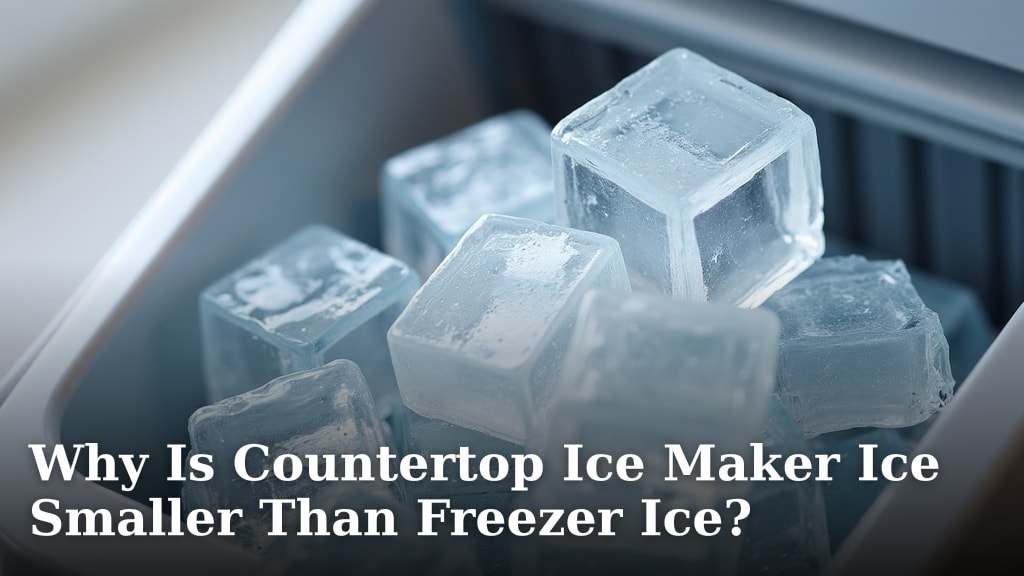
Countertop ice maker ice is often smaller than the cubes from your freezer because they are designed for quick freezing and convenience. These machines use a different freezing method that prioritizes speed, resulting in smaller, more bite-sized ice pieces perfect for chilling drinks fast.
Unlike your freezer, which has ample space and time to form larger ice blocks, countertop units have a limited capacity. They are built to produce ice continuously in smaller batches. This process is optimized for making ice ready to use in just a few minutes.
- Countertop ice makers prioritize speed over size.
- Their freezing mechanism is different from a standard freezer.
- Smaller ice melts faster and chills drinks quicker.
- Countertop ice is ideal for immediate use and smaller cups.
Let’s take a closer look at why this happens and what it means for your drinks.
Why Your Countertop Ice Maker Makes Smaller Ice Than Your Freezer
Have you ever noticed that the ice from your countertop ice maker seems a bit smaller than the big, solid cubes from your freezer? You’re not imagining it! There are several good reasons why this happens. It all comes down to how these machines are designed and what they’re built to do.
Your countertop ice maker is all about **speed and convenience**. It’s made to give you ice quickly for that immediate drink or to keep your cooler chilled on a short trip. Your home freezer, on the other hand, has a different job. It’s built for long-term storage and bulk ice production. Our guide explains if a countertop ice maker can store ice or only make it.
The Science of Fast Freezing
Countertop ice makers use a process that’s quite different from your freezer. They often employ a method where water is repeatedly sprayed or dripped onto a freezing plate or coils. This creates thin layers of ice that build up over time.
Continuous Layering vs. Bulk Freezing
Think of it like making pancakes versus baking a cake. Your freezer is like baking a big cake; it takes time to bake through and set. The ice maker is more like making a stack of thin pancakes. Each layer freezes quickly. This allows the machine to make ice continuously in smaller, manageable batches.
This rapid freezing is why the ice is often clear. Because the water freezes so fast, dissolved gases don’t have much time to escape the ice. This results in that beautiful, transparent look many people love. It’s a sign of the machine working quickly.
Optimizing for Quick Chilling
The smaller size of the ice isn’t just a side effect; it’s often by design. Smaller ice pieces have a larger surface area relative to their volume. This means they can cool down your drink much faster. If you’re pouring a soda or a cocktail, you want it chilled right away, and smaller ice does that job efficiently.
Many users find this ideal for cocktails, iced coffee, or just a glass of water on a hot day. The ice chills the liquid quickly without watering it down too much too fast. It’s a smart trade-off for immediate refreshment.
Design Differences: Speed vs. Storage
The fundamental difference lies in the core purpose of each appliance. Your refrigerator’s freezer is designed for preserving food over the long haul. Its ice maker, if it has one, usually makes ice in trays that sit for a while until fully frozen.
Countertop Ice Maker: Built for the Moment
Countertop units are designed for producing ice for immediate consumption. They have a smaller water reservoir and a faster cycling time. A typical machine might produce a batch of ice in as little as 6 to 10 minutes. This means it’s constantly working to keep up with demand.
Because they are designed for this rapid cycle, the ice formations are generally smaller. They might create “nugget” ice, small cubes, or chewable ice. These shapes are perfect for filling up a glass without taking up too much space. They also tend to be less dense than larger freezer ice.
Freezer Ice: Designed for Longevity
Your standard freezer is optimized for maintaining a consistent, very low temperature to keep food frozen for weeks or months. The ice it makes, whether in trays or an automatic dispenser, is meant to freeze solid. This takes more time and results in larger, denser ice cubes.
Larger ice cubes melt more slowly. This is beneficial for things like iced tea or lemonade where you don’t want it diluted too quickly. It’s also more economical for bulk ice storage. You get more ice for the amount of water used compared to smaller, faster-frozen pieces.
The Role of Water Flow and Temperature
The way water interacts with the freezing mechanism also plays a big part. Countertop ice makers often use a continuous flow of water. This circulating water helps to freeze faster and more evenly on the evaporator plates.
Circulation in Ice Makers
As water flows over the chilled surfaces, a thin layer freezes. The machine then ejects this ice into a collection bin. It then repeats the process, spraying more water to form the next layer. This constant movement prevents the formation of very large, solid blocks.
Research into freezing technologies shows that surface area and water flow are key to controlling the size and speed of ice formation. The design of countertop ice makers prioritizes maximizing these factors for quick production (Journal of Food Engineering).
Freezer’s Static Environment
In contrast, a freezer’s ice maker typically fills a tray with a set amount of water. This water then sits relatively still while it freezes. Without the constant circulation, the freezing process takes longer to penetrate the entire volume of water, leading to larger, more solid cubes.
The temperature in a freezer is also usually lower and more stable than the freezing plates in a countertop unit. This deeper freeze contributes to the density and size of the ice.
What Does Smaller Ice Mean for You?
So, you’ve got smaller ice. What does that really mean for your daily use?
Faster Chilling Power
As mentioned, smaller ice melts quicker. This translates to your drinks getting cold faster. If you’re in a hurry, this is a definite plus. It’s like having instant ice.
Ideal for Specific Drinks and Uses
Many people prefer smaller ice for certain beverages. It fits easily into smaller glasses and tumblers. It’s also great for situations where rapid cooling is desired, like a quickly poured glass of juice or a sports drink.
Think about a small glass for a child’s drink or when you’re using a cup with a narrow opening. Smaller ice pieces are much easier to get in and out.
Potential for Faster Dilution
On the flip side, because smaller ice melts faster, it can also dilute your drink more quickly. If you like to sip on a drink for a long time, you might find your beverage gets watered down sooner than you’d prefer.
This is a trade-off many users are happy to make for the convenience and speed. If slow dilution is a major concern, you might consider adding larger ice cubes from your freezer to the mix or looking for ice makers that offer different ice size options.
A Quick Comparison of Ice Types
Let’s break down the key differences you’ll find:
| Feature | Countertop Ice Maker Ice | Standard Freezer Ice |
|---|---|---|
| Size | Smaller, bite-sized | Larger, full cubes |
| Production Speed | Very fast (minutes per batch) | Slower (hours for full trays) |
| Melting Speed | Faster | Slower |
| Density | Generally less dense | Denser, more solid |
| Primary Use Case | Immediate chilling, convenience | Long-term storage, bulk ice |
| Appearance | Often clearer (fast freeze) | Can be cloudy (slower freeze) |
Choosing the Right Ice for Your Needs
Ultimately, the size of the ice your countertop maker produces is a feature, not a flaw. It’s designed to meet a specific need: quick, convenient ice.
Consider what you use ice for most often. If it’s for immediate drinks and parties, your countertop maker is likely perfect. If you need ice for long-term storage or slow-melting cubes for specific drinks, your freezer will still be your go-to.
Here’s a quick checklist to help you think about your ice preferences:
- Do you need ice ready in minutes?
- Do you prefer smaller, chewable ice pieces?
- Is fast chilling of drinks your main goal?
- Do you want ice for cocktails or mixed drinks?
- Do you have limited freezer space for ice trays?
- Are you okay with ice that might dilute drinks a bit faster?
Conclusion
You’ve seen that your countertop ice maker makes smaller ice for a good reason: speed and convenience. It uses a rapid freezing process that prioritizes getting you ice quickly for immediate use. This is different from your freezer, which is built for slower, bulk ice production for storage. The smaller ice chills your drinks faster, making it ideal for many everyday situations. While it may dilute drinks a bit quicker, it’s a trade-off for the effortless refreshment it provides. Now you can better choose the right ice maker for your lifestyle and enjoy your perfectly chilled beverages.
Frequently Asked Questions
Does smaller ice melt faster in my drink?
Yes, smaller ice pieces generally melt faster than larger ones. This is because they have a larger surface area compared to their volume. This means they cool your drink down very quickly, but they can also dilute it more rapidly.
Can I make larger ice in my countertop ice maker?
Most countertop ice makers are designed to produce smaller ice as part of their fast-freezing process. They typically don’t offer options for larger ice cubes. If you need larger ice, your freezer is still the best source.
Is countertop ice less dense than freezer ice?
Countertop ice maker ice is often less dense because of the rapid freezing method. The fast process doesn’t allow as much time for the water molecules to arrange into a solid, dense structure. Freezer ice, with its slower freezing time, tends to be denser.
Why is my countertop ice so clear?
The clear appearance of your countertop ice is a direct result of its fast freezing process. Rapid freezing traps fewer air bubbles and impurities within the ice. This quick cycle allows dissolved gases to escape less readily, leading to that desirable transparent look.
Is a countertop ice maker worth it if I already have a freezer ice maker?
A countertop ice maker is ideal if you frequently need ice quickly for drinks or parties and don’t want to wait for your freezer. It offers convenience and rapid ice production that a standard freezer cannot match. If fast chilling is your priority, it’s a great addition.